South Kensington House Clearance - Health & Safety Policy
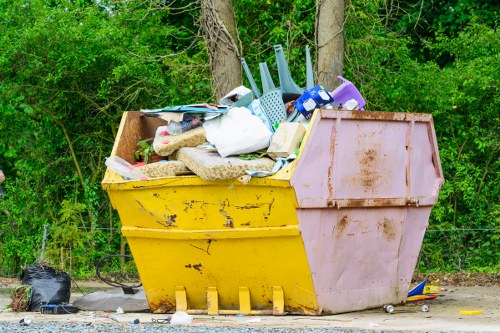 This Health and Safety Policy describes the standards, procedures and responsibilities maintained by South Kensington House Clearance to manage risks associated with house clearance, rubbish removal and related waste services. The policy applies across our service area to all employees, contractors and subcontractors performing clearance, rubbish collection, reuse and disposal tasks. It is designed to minimise harm, prevent accidents and ensure compliance with relevant industry standards while remaining concise and practical.
We commit to continuous risk assessment, appropriate training and supervision, and clear communication of safety expectations. Duties include safe handling of bulky items, correct lifting techniques, and segregation of hazardous materials from general waste. The policy supports a proactive safety culture where workers are empowered to report hazards and stop unsafe work without fear of reprisal.
 Our objectives include reducing workplace incidents, ensuring legal compliance, and maintaining safe premises and vehicles. We perform regular inspections of work sites and review procedures after any near miss or accident. All staff receive induction training and periodic refresher courses specific to clearance operations and rubbish company service area challenges, including manual handling and traffic management when accessing properties.
Responsibilities are allocated to ensure accountability: senior management must allocate resources and oversee policy delivery; supervisors ensure safe systems of work are followed; employees must cooperate, attend training and report hazards. Where contractors are engaged, we require evidence of competency and insurance and insist they adhere to our safety standards while on site.
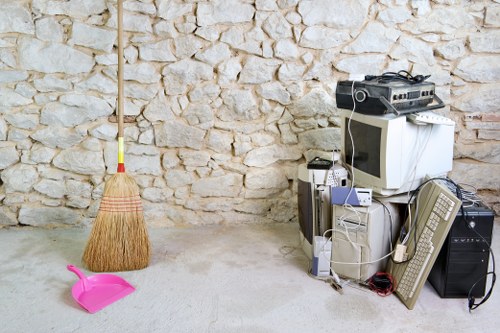 Risk assessment is central to our approach. Each job is assessed before work starts to identify hazards such as sharp objects, asbestos-containing materials, biohazards, electrical items, unstable furniture or restricted access. Controls follow the hierarchy of risk control: eliminate hazards where possible, substitute, use engineering controls, implement administrative controls and provide appropriate personal protective equipment (PPE).
Key control measures include:
- Site assessment on arrival to confirm safe access routes and safe disposal points
- PPE provision and mandatory use where risks are identified
- Manual handling training and mechanical aids to reduce injury
- Waste segregation to separate recyclable materials and hazardous waste
- Vehicle loading procedures to prevent shifting loads in transit
Emergency procedures are in place for incidents such as fire, major spillages, significant injury or discovery of hazardous materials. Staff are trained in basic first aid and emergency reporting. We maintain clear procedures for safe isolation of risks, securing the area and notifying emergency services when required. Incident records are retained and reviewed to inform continuous improvement.
 Training, competence and supervision are emphasised. All operatives undertaking house clearance duties receive task-specific training and are assessed as competent before working unsupervised. Supervisors conduct spot checks and routine observations to ensure safe methods are used. We promote a strong near-miss reporting culture to capture learning without attributing blame.
 Health and wellbeing measures include policies on manual handling limits, provision of hydration and rest breaks, and occupational health referrals when necessary. Staff with medical conditions that may affect task performance are managed sensitively with appropriate adjustments and risk controls implemented to allow safe participation in work where feasible.
Environmental and waste compliance forms part of our safety approach. We operate waste handling procedures that prioritise recycling and lawful disposal. Hazardous items discovered during clearances are segregated and processed according to regulations to protect workers, clients and the wider environment. Our rubbish removal procedures include safe containerisation and labelling to prevent cross-contamination.
Monitoring and review mechanisms ensure the policy remains effective. We audit operations, review incident trends and update procedures in response to legislative changes and operational learning. Performance indicators include incident rates, training completion rates and audit results, which are reported to management and used to drive improvement.
Visitors to sites, property owners and members of the public should comply with site instructions and respect exclusion zones. While we strive to minimise disruption, safety takes precedence and work may be delayed until a safe solution is agreed. This policy is intended to clarify expectations and create a reliably safe environment for clearance activities.
Compliance with this policy is mandatory for everyone engaged in house clearance and rubbish services with our organisation. Management will allocate sufficient resources to realise the policy objectives, and every team member is expected to contribute actively to a safe workplace. Breaches of this policy may result in disciplinary action where appropriate.